
Does it matter whether you breathe through your mouth or your nose?

A perfect marathon runner´s nose
Yes; the nose acts as an air-conditioning system with three important functions. Nasal hairs and mucous membranes trap dust and particles, while the air is warmed and humidified before reaching the lungs—processes that benefit the airways. Research also shows that the gas molecule nitric oxide (NO) is produced in our sinuses. This gas possesses vasodilating and bactericidal properties; when inhaling through the nose, NO is drawn out of the sinuses and carried down to the lungs, positively affecting blood oxygenation.

As the breathing rate rises, so does the heart rate. The ribcage acts like a bellows, helping to draw more blood into the heart. At the same time, the body exhales more carbon dioxide. Carbon dioxide acts as an acid in the blood, so exhaling more of it makes the blood more alkaline. This enables the body to better handle the lactic acid that builds up in the muscles during high-intensity running. In short, exhaling carbon dioxide allows you to run faster and for longer.
We breathe over 20,000 times a day without even thinking about it. Breathing is the body’s most fundamental rhythm—averaging about 15 breaths per minute at rest—but the pattern changes instantly as soon as we move or experience an emotional reaction. We breathe partly to supply oxygen to the blood, but expelling carbon dioxide is even more important. When we hold our breath, it is not the lack of oxygen that initially causes discomfort, but the rising level of carbon dioxide in the blood.

When the body is subjected to stress, an evolutionary mechanism kicks in, preparing the body for physical exertion that was originally a matter of survival. Whether you need to run away from something trying to eat you, or chase down prey you intend to eat, your body prepares by increasing its breathing rate.
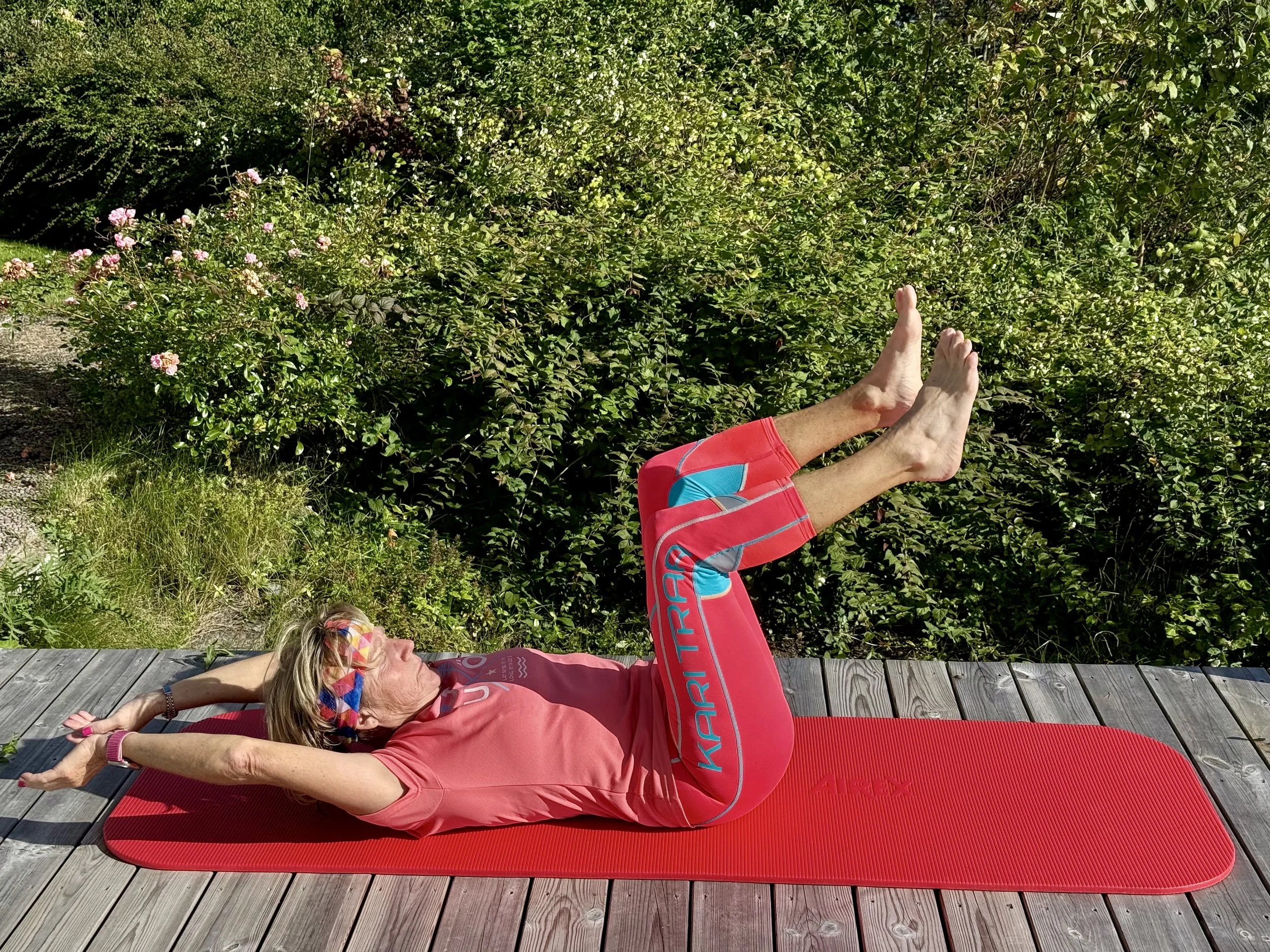
Deadbug belly breath - 5 inhales and exhales
Lie on your back with knees bent, feet in the air, so your shins are parallel to the ground.
Extend your arms out past your head.
Lift your head until your chin is tucked against your chest and you´re looking in between your legs, tongue on the roof of the mouth (you can find this position by swallowing).
Breath in through your nose, feeling your belly expand and your lower back flatten against the ground.
Breathe out through your nose, feeling your belly soften while maintaining position.
Purpose: How you breathe tells your body whether you´re safe. By training your breathing, you can conserve energy and calm your nervous system.